How SFCM's Faculty Train the Next Generation of Concertmasters, In Their Own Words
Two SF concertmasters—Kay Stern of the San Francisco Opera Orchestra and Cordula Merks of the San Francisco Ballet Orchestra—explain how SFCM's one-year Professional Studies Certificate program prepares violinists for the high-profile role.

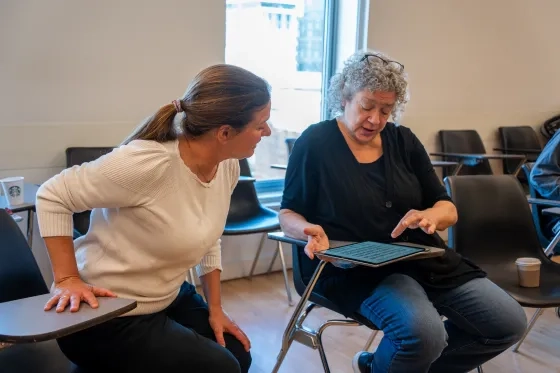
Kay Stern with a student.
One of the most unique positions in the orchestra, violinists who hold the role of concertmaster need to be part diplomat, part translator, and part ringleader. So it's fortunate that SFCM has two prominent concertmasters teaching that challenging blend.
Kay Stern of the San Francisco Opera (SFO) Orchestra and Cordula Merks of the San Francisco Ballet (SFB) Orchestra anchor the Conservatory's one-year Concertmaster Professional Studies Certificate program; Stern has held the role with the SFO Orchestra since 1994, while Merks' first season with the SFB Orchestra was in 2015.
From left: Cordula Merks and Kay Stern.
The concertmaster is, after the conductor, the most important leader in an orchestra. Though most recognized by the public for beginning performances by standing in front of the orchestra and taking the concert A note from the principal oboe to tune the ensemble, the concertmaster's work begins before the first rehearsal by preparing the score with bowings and articulations to indicate character, dynamic and phrasing. Once all of the other string section principals incorporate these details into their own parts, rehearsals begin, at which point the concertmaster has the responsibility of interpreting the conductor’s movements and verbal requests to the strings and the entire orchestra.
Kay Stern: "As one of the first female concertmasters of a major US orchestra, I have 35 years experience in the trenches interpreting a multitude of conductors' idiosyncrasies, gestures, and quirks. A concertmaster needs to know how to convey and execute the conductor’s intent, and also know how to help a conductor when their requests aren’t immediately clear physically or verbally. While a conductor communicates through movement, shaping the music in real time, a concertmaster—along with other section leaders—translates this into technical and musical decisions. A concertmaster models immediate flexibility with bow articulations, dynamics, phrases, and conveys the musical character.
Another key role is to act as a bridge between orchestra, conductor and management. Fostering good teamwork among the ensemble and company is a crucial aspect of the role and success of the ensemble."
Cordula Merks: "The role of concertmaster is very much a combination of being a leader and also being part of a team. You need to have the kind of personality that wants to have an active say in the music-making of an orchestra. It's not just a question of playing level; you should have a desire to be part of the whole artistic process. It's important that you enjoy communicating with people, and also have the will to advocate for your colleagues in the orchestra, when necessary. It's also the concertmaster's responsibility to play all sorts of violin solos—and at times full concertos! The opportunity to perform many violin concertos was definitely one of the factors that attracted me to audition for my current job at SF Ballet."
Both Merks and Stern work in private lessons with their students on excerpts and important concertmaster solos from the orchestral repertoire. Additionally, every semester SFCM offers multiple orchestral excerpt classes and invites distinguished guest artists for side-by-side performances and masterclasses.
Stern: "Studying and technically mastering the music score is essential, but really only the beginning of the multi-faceted journey of a concertmaster."
Merks: "Students interested in the concertmaster role have to develop an idea of what they believe good leadership is, and how they can fulfill that. As concertmaster you really do set a tone, maybe for an entire orchestra even. You have to always at least strive to be the most prepared."
Stern: “Ahead of the orchestra rehearsals I try to have a clear idea of how our first violin part fits in with the rest of the orchestra."
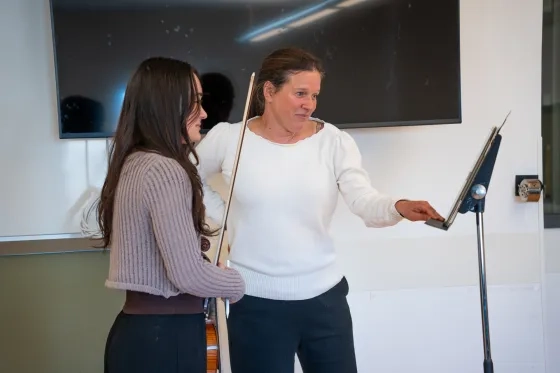
Cordula Merks (right) with a student.
Merks: "I try to have something musical to offer right from the start of the rehearsal process. But it is important to be flexible and not to be too set in a certain way; I always have to be ready for the conductor asking for changes. Every orchestra works slightly differently. It's like a living organism, a culture that you're a part of: You help shape that—and you take from it as well, and that's very exciting."
Stern: "Our concertmaster track students always have the opportunity in our school orchestra to sit either concertmaster, associate concertmaster, or principal second, which is a nice balance between that main leadership role and the ones that are more supportive."
Merks: "The kind of program we have here at SFCM is quite special. There are many ways to be a good leader, and it takes time and 'real-life' practice to develop your own style and clear language—body and otherwise—as a concertmaster. Only while doing the job do you learn what I like to call the balance of acting and reacting: when to actively lead and when to sit back and follow more. Also, our Music Director, Edwin Outwater, is so fantastic for our school. He's always makes time to hear the students when they prepare for auditions, and gives them feedback based on all his experience with some of the best orchestras in the world. That connection, whether with him or the other conductors who come through the school, is not to be underestimated."
Merks and Stern both emphasize that they were privileged to have had supportive teachers and coaches who helped them develop their musical voice and changed their lives and career trajectories: "We love to pass that on to students, giving them courage, technique, and ways to find their true musical expression."
Learn more about studying strings, violin, or the role of concertmaster at SFCM. Merks and Stern can be also be contacted directly via their faculty pages.